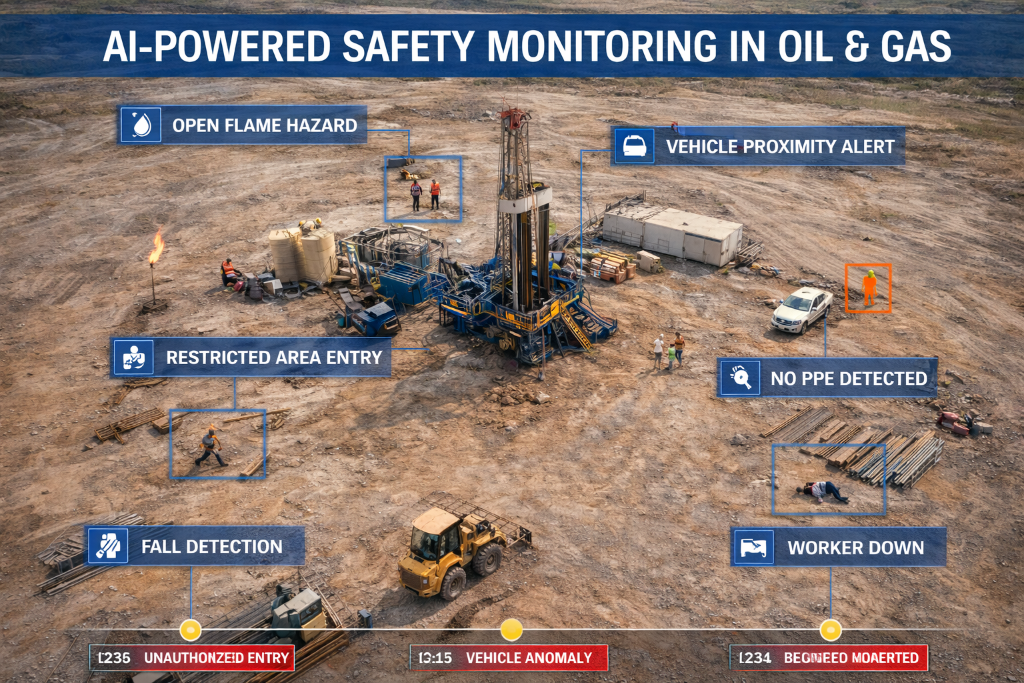
The oil and gas industry has always been at the forefront of innovation, and AI-powered safety monitoring represents the next evolution in workplace protection. With billions of dollars in potential liability and thousands of workers at risk daily, companies are turning to artificial intelligence to create safer, more efficient operations.
The Challenge
Traditional safety monitoring relies heavily on human observation and periodic audits. This approach has significant limitations: human fatigue, inconsistent enforcement, and delayed incident response. In high-risk environments like refineries and drilling sites, these gaps can have catastrophic consequences.
How AI Changes the Game
Modern AI vision systems provide 24/7 monitoring of critical areas, detecting safety violations in real-time. These systems can identify:
- Missing or improper PPE usage
- Unauthorized access to restricted zones
- Potential hazards before they cause incidents
- Anomalous behavior patterns that indicate risk
Real-World Impact
Companies implementing AI safety monitoring have reported 60% reduction in workplace incidents within the first year. The technology pays for itself through reduced insurance premiums, fewer work stoppages, and improved regulatory compliance.
Implementation Best Practices
Successful deployment requires careful planning. Start with high-risk areas, ensure worker buy-in through transparent communication, and integrate with existing safety protocols. The technology should augment, not replace, human safety personnel.
As we look to the future, AI safety monitoring will become standard across all industrial operations. The question isn't whether to adopt this technology, but how quickly you can implement it to protect your workforce.

